About the work of Paul Lawson – Updated.
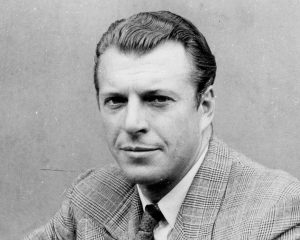
About the work of Paul Lawson –
Lawson was called upon by Sir John Burton Cleland to make the plaster cast bust of the Somerton Man. Cleland’s original orders were for Lawson to make the bust, a cast of the Somerton Man’s rather large hands, and a cast of the Somerton Man’s skull.
The idea of casting the skull was so that Cleland could keep the skull for future examination and bury the man with a substituted plaster skull. After the bust was moulded, Lawson proceeded to peel back the scalp in order to remove the skull, as ordered, when the Police hurriedly removed the body insisting it had to be buried immediately. Given that the body had not been buried for six months, it seemed rather odd to Lawson that the Police could not wait another day. And in reality, the body did not get buried for another 6 days. Thus, the cast of the skull and hands were unfortunately never carried out.
Lawson’s observations of the body
Lawson was not allowed by the Police to transport the body to his laboratory, and the moulding work had to be carried out at the City Morgue using limited materials and tools. Lawson was not allowed any assistance, and carried out the work with three detectives watching over him. As the frozen body was thawing, the skin became very damp and Lawson co-opted the detectives to keep padding it dry. Lawson observed that all the internal organs and brain had been totally removed previously (for toxicological testing). Due to discolouration of the skin, as the body was 6 months old, Lawson could not see the nicotine stains on the dead man’s fingers. Lawson was not able to observe the man’s teeth as the mouth was locked closed. Lawson noticed the toe and finger nails were clean and well trimmed. He also noted high calf muscles and wedged toes. Having been an amateur wrestler, himself, Lawson particularly admired that the man had a strong upper body with narrow waist. He noticed the skin on the hands and feet were particularly soft with no signs of manual labour.
Manufacture of the bust
Lawson’s method was to build a wooden frame around the upper body, plugging up any gaps with clay. He then poured in plaster of Paris, to create a mould. The process was then repeated with the body turned over, to make the second half of the mould. Then the ears had to have individual moulds made. The man’s hair appears neatly in the final bust, as Lawson employed a trick of combing liquid soap into the hair so it wouldn’t stick to the plaster. Once the moulds were completed at the City Morgue, Lawson was then able to take them back to his lab to finally cast the bust and ears, and stick the ears into place. For the casting process he used plaster of Paris reinforced with sisal fibres. The original mould does not exist today as it had to be chipped away from the bust and discarded. Because, the body had been lying on a morgue slab for six months the back of the head appears flattened.
Before the ears were moulded, Lawson first had to convert the plaster mould of the ears into a wax mould. Then the ears were cast in the wax mould. This is because the ears were fragile and the wax mould could be easily melted away at the end of the process.
Impact of the bust
The bust certainly added to the mystique of the case, and has created much media interest. However, its affect so far has been more of a hindrance to the case. The fact is that, due to the embalming process and that the bust was made six months after death, it does not really resemble the dead man. The facial features and nose are much flatter than reality, and the whole body shrunk and so the cast has an appearance of being smaller than expected. Both the bust and post-embalmed photos of the dead man are in fact red-herrings or furphies, and have probably wasted hours of police time. In hindsight, the public ought to have only been shown the photos of the man when he had just died.
Lifted from here ..
https://www.eleceng.adelaide.edu.au/personal/dabbott/wiki/index.php/Paul_Francis_Lawson
~~~~~~~~~~~~~~~~~~~~~~~~~~~~~~
Then this from Clive about his conversation with Lawson.
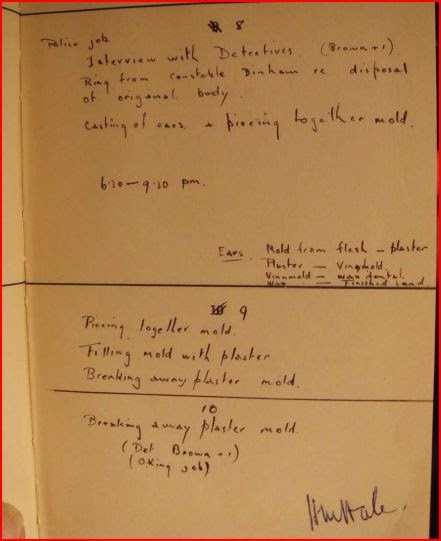
Despite his age and physical frailty, his brain was as sharp as a man years younger. He chose his words carefully, very carefully, as I remember. Sometimes I got the impression he was about to say something, one time especially, when I showed him his diary entry about the disposal of the ‘original body’(below). He looked at the signature at the bottom of the page, didn’t say anything but, I noticed when he read the entry about the ‘original body’ he suddenly shook his head as if to say I know nothing about this, interesting?
~~~~~~~~~~~~~~~~~~~~~~~~~~~~~~~~~~~
Then this “Tender Ground” interview between Lawson an Littlemore where Lawson declines to name Jessica Harkness as a person who could have identified the bust of the Somerton Man. (go to minute 2.00)
~~~~~~~~~~~~~~~~~~~~~~~~
Then this. The inscription page of the Boxall Rubaiyat with the name Jestyn covered up

~~~~~~~~~~~~~~~~~~~~~~~~~~
Then, to reiterate (ad nauseam) the following worriesome matters:
The contents of the suitcase weren’t fingerprinted despite that James Durham, one of Australia’s senior fingerprinters was available to do the job.
The coroner changed his ruling as to where the Somerton Man died, despite the body’s lividity which convinced him in his initial ruling that the man’s death took place in another location.
The coroner closed the inquest down despite the unearthing of further and crucial evidence and emergence of new witnesses, including Harkness and Boxall.
The Freeman Rubaiyat was never photographed. Newspapers supplied the photos accepted as being authentic after being advised by the police as to their supposed nature.
The Freeman Rubaiyat was alleged to have been lost early in the investigation and was not supplied to Naval Intelligence within days of its alleged handover by Chemist Freeman in order to assist them in attempting to decipher the code.
Witness Strapps stated in his deposition that the Somerton Man’s trousers were striped; this was not questioned.
The Somerton Man was found to be wearing plain faun-brown trousers.
PC Moss contradicted his superior officer (DS Leane) by stating no matches were found on the body, which, if accepted would have raised the question as to how the Somerton Man lit the partly smoked cigarette found wedged under his chin.
Professor Cleland and Senior Government analyst James Cowan had to resort to trying on the clothing and shoes found in the suitcase to decide if they could have fitted the body.
There is no record of either of them asking why fingerprints were not taken of any of the suitable objects in the suitcase – like the glass dish, the broken scissors, razor strop, shaving brush, tin of boot polish, tea spoon, envelopes, the other pair of scissors, the cut down knife, the screwdriver, the cigarette lighter, any of which, if successful , would have made their exercise unnecessary.
That should be enough to go on.
No, wait, there is one more thing
‘It is anticipated that the final report will be made available to the State Coroner in early 2024.’
And here we are in early 2026


 The Somerton Man ..
Trackbacks & Pingbacks