Small matters of little consequence in determining the true identity of the Somerton Man

It is not unusual for men aged about twenty with a shock of naturally blond hair to have it turn dark by the time they reached their middle forties.
< —- How could the bust have been contaminated? The greatest care of it was taken at all times, particularly when being transported. The gentleman pictured seems to be using his handkerchief to protect the bust, commendable indeed. But who knows where it’s been, the handkerchief that is.
All that was necessary to unlock a car door in the 40’s was a hairpin. He had one.
Or a small screwdriver. He had one of those as well.
All that was needed to hot wire a car ignition in the forties was a pair of fingers. He had five of them.
Some men who played suburban football when boys maintained if not improved their exceptional physiques well into their forties, their calves in particular. Whether or not they continued to play is not considered relevant. Neither were missing teeth.
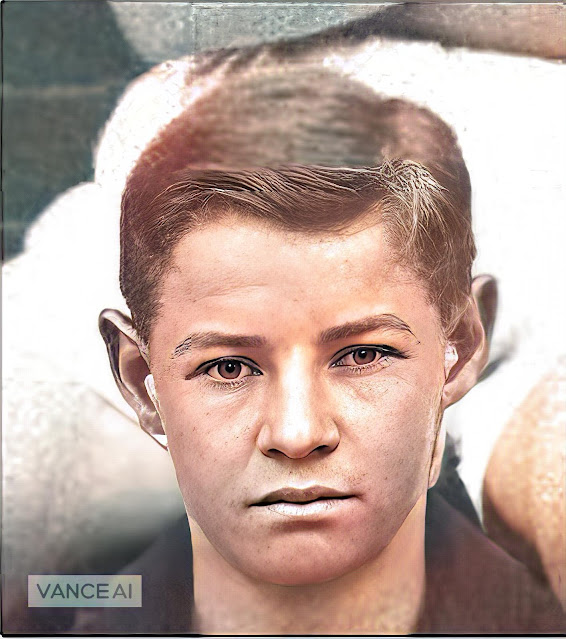
A young Carl Webb
It was not unusual for dark-haired boys aged about twelve to have their hair colour change to bright blonde by the time they reach their twenties.

Then have it revert back to dark in their forties.

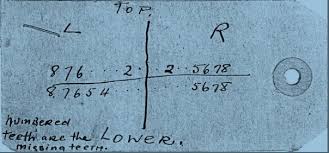
It’s common knowledge that a very well-built man missing eighteen teeth is able to feed and maintain a body-builder’s physique through to his middle-age.
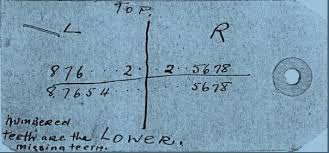
Missing teeth numbered, all 18
Public drunkenness was so common in Glenelg in the forties nobody would have noticed a well-dressed inebriate, or a possibly fatally poisoned man staggering through town on his way to the beach for a little lie down on one late summer afternoon.
In 1959 man reported to the police of seeing another man carrying a man along the Somerton Beach foreshore on the night of the 30th, his statement was taken and appeared to have been filed in the same place as the Freeman Rubaiyat, wherever that was. Abbott thinks this is all bunkum and he should know, remembering his many years of bunkum about ears and Robin Thomson’s lineage.
Despite what has been described as the most primitive of conditions in the Adelaide morgue at the time (thanks again Ruth Collins), there is no reason to believe that any errant hair may have departed the head of another resident corpse and found a resting place in the wet plaster of the bust Paul Lawson was putting together.
Three inches difference in height is almost negligible. Ask anyone.

Charlie is 5’11” – Roy, 5’8”, so where’s the problem?
The Freeman Rubaiyat was never photographed. Maybe police photographer Patrick Durham ran out of flash bulbs.
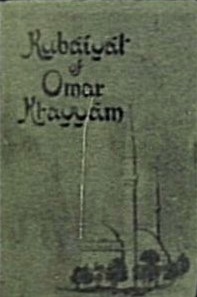
This isn’t it .. check with Feltus
But the suitcase and its contents were photographed singularly and collectively, as were the clothes worn by the corpse. As was the corpse, both prior to the embalming and post. Anomaly? We don’t think so.
Public drunkenness was so common in Glenelg in the forties nobody noticed an inebriate or fatally poisoned man stagger up to the car of a well-known local chemist and toss an object through the car’s back window.
It is not unusual for a fully inebriated or fatally poisoned man to be able to remove a pack of cigarettes from his pocket, take one out and place it in his mouth, put the pack back, take a box of matches from his pocket, remove a match, strike it successfully, light his cigarette put the matches back in his pocket then wave companionably to a couple passing by.
It is of no real consequence that despite the above ^ the first police officer attending didn’t find any matches on the body.
Why would anyone think it was necessary for the Naval cryptographers to have the actual book the code was written on? SAPOL didn’t and they were the experts, yes? Nick Pelling agrees, which is surprising given his expertise in deciphering ancient manuscripts, but what do I know, being an old surfer from Bondi?
It was perfectly reasonable for senior members of the Adelaide Homicide squad to forgo their normal duties and spend their days at the morgue watching Lawson at his work despite what must have been a certain ripeness in the atmosphere.
Despite the necessity of having a comprehensive set of tools and equipment to be able to pursue a career in electrical engineering and instrument-making, it is not unusual for such an individual to be able to do the job with only a cut-down knife, a pair of scissors and particle brush – ask Derek Abbott if you have any doubts, he doesn’t.

It is not unusual for a man travelling interstate to forget to pack a pair of spare socks.
It is not unusual for a man travelling interstate to pack seven handkerchiefs.
It is not unusual for a traveller to lodge a near-new suitcase containing all his belongings in a railway’s luggage office without bothering to lock it.
It is not unusual for a man to use his ticket pocket for train and bus tickets but not for his luggage ticket, which was never found.
Taking fingerprints is reasonably deemed unnecessary when a piece of thread does the job of matching a body to what is suspected to be his belongings (re suitcase).
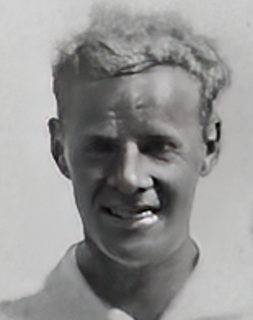
The two Charlie Webbs – any similarities in hair colour, ears, head shape (forehead) and hair shape are entirely coincidental..
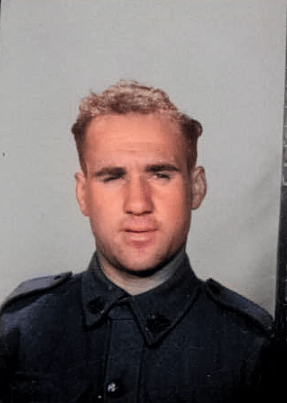
This other Charlie Webb was about 5’8’ .. same height as Roy in the tagged photo, and this Charlie’s hair hasn’t reverted to dark as he got older either. Intriguing, ain’t it.
It is not unusual for a travelling man to have no coins in any of his pockets: no farthings, half-pennies, pennies, threepences, sixpences, deaners, two-bob bits or florins. Not to mention the folding stuff.
It was only coincidental that an alive, well-dressed man was seen lying by the steps on the evening of the 30th in exactly the same place as a well-dressed man was found dead the following morning.
There is no reason to suspect that the tagging of the photo in the Webb family album was done by someone other than the original owner. We all do it, right?

Strapps was wrong, the trousers matched. He must have been paying too much attention to his girlfriend who was sitting beside him at the time.
There is probably a reasonable explanation why a glycoside poison, known to act quickly took over two hours to kill SM, if indeed that was what he took to end his life and which was thought likely by Sir Stanton Hicks.
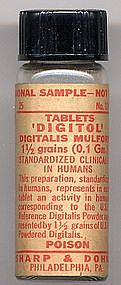
glycoside poison – no prescription necessary
DS Leane lost the Rubaiyat.
DS Leane didn’t lose the much smaller TS slip.
Accidents happen.
And no doubt there is a reasonable explanation how a fatally poisoned man left the beach after dusk, hungry despite his condition, found a late opening local pie-shop where he purchased and consumed a pasty before returning to his original position to expire.
And of course to do all of that and maintain an astute public invisibility.
There is no reason to believe Nurse Thomson’s refusal to give the police any information about the dead man was to protect his relationship with either herself or boyfriend Prosper. Prosper, being in the second hand motor business knew all about hairpins and small screwdrivers.
It’s perfectly acceptable to believe a detective sergeant when he says a box of matches was found on the body rather than accept conflicting evidence from the police constable who searched the body and said that wasn’t the case. Went to the newspapers and stated the same in fact. No reason to believe that hurt his promotional aspirations, you think?
It’s perfectly acceptable for a coroner who previously had grave doubts as to whether Carl Webb had died on the beach to change his mind some years later and rule he had indeed done so, died on the beach, and decide this without the benefit of any new evidence despite stating in his original summing up that he was holding the inquest in abeyance in order to see if any further evidence was forth coming..
Such as ….
(1) the finding of the Rubaiyat and (2) the discovery of the code written on the back of the book and (3) the discovery of Harkness’ phone number also written on the back of the book and (4) the account of Harkness’ first interview with the police and (5) the account of her reaction to seeing the bust and (6) the discovery of the nature of her relationship with Boxall, based on her gift to him of another Rubaiyat – nevertheless and despite all, the coroner decided that none of the above bore any real relevance to the case and there was no reason to re-open the inquest. So he dropped the gavel on it.

So there .. suck it up.


 The Somerton Man ..
and it’s perfectly acceptable for police to destroy the suitcase and all the contents to erase all trace of evidence
Case closed (by them)
LikeLike
And, no doubt the suitcase, and its contents were likened to a possible ‘ticking bomb’ by certain individuals in authority. Individuals who were never questioned, apparently, as to why no fingerprints were found on/in the suitcase. Per GF, the suitcase and its contents were destroyed in 1986, I’m just surprised that the suitcase and contents weren’t destroyed long before that date.
LikeLike
If, as some suspect the major players all acted in some sort of connivance in hiding the truth, they must have had a system of sorts in place that enabled them to discuss such matters in privacy.
LikeLike
The cops got wind of DNA capability in1986 and dumped the evidence, is how I read it. The timing is too coincidental to ignore that. No fingerprints were taken, but plenty of DNA fingerprints existed on all the evidence
Internet: DNA fingerprinting was first used in forensic science in 1986 when police in the UK requested Dr. Alec J. Jeffreys, of University of Leicester, to verify a suspect’s confession that he was responsible for two rape-murders. Tests proved that the suspect had not committed the crimes.
LikeLike
Some years back I spoke with retired Adelaide Major Crime Det. Bartlett (a different Bartlett than pictured with the suitcase in1948). A gentleman, kind and respectful, and he seemed a very dedicated police officer (past). He spoke about SM’s suitcase and their reviewing evidence during the 80’s, and that he’d seen the contents which had been poorly stored. The impression our conversation left me, was that there’d been dampness leaving the suitcase contents rank and mouldy / unsuitable for testing. So I asked how the suitcase was destroyed and whether he witnessed it being burned or ‘whatever’. He said he didn’t see where it ended up. I thought afterwards that there must be ‘chain of evidence’ rules requiring such items to be listed and signed off and the destruction witnessed etc.. (thinking confiscated drugs in particular). I enquired about the suitcase destruction suspecting that it may have become a policeman’s trophy (similar to SM’s plaster bust ) or remained hidden away somewhere in the Police Museum. I didn’t get the impression the suitcase was destroyed for sinister reasons, but it’s pretty obvious the storage of ‘this’ particular evidence, wasn’t given high priority.
LikeLike
Pete…Initially I didn’t feel it necessary to detail retired Det. Bartlett full name, however I will now add, that he preferred ‘John’ rather than be called Graham. As for the other Bartlett, Dave…when I spoke with the psychiatrist (Dr. Vance Tottman) who’d treated my maternal grandfather in early 1966 for epilepsy, Vance told me his own family story and about Dave Bartlett, who began as ‘the family friend’, and eventually became his step-father. Seems in earlier years, (can’t recall whether it’s 40’s or 50’s) Dave Bartlett and Dr. Tottman’s Uncle were mates, however when the (less guilty) Uncle was found with stolen goods and sent to jail, Dave failed to own up or take any responsibility. He instead walked away without consequence, leaving the Uncle to take full blame. What followed was a bit shocking and unexpected for those times I thought. The Uncle’s family were considered ‘well off’, had hotels (one being the Stag) so they used their money and connections to ‘pay off’ all involved from the Judge down, in order to eventually have the Uncle released from jail (paid tens of thousand in pounds). Understandably Dr. Tottman was displeased when years later, Dave Bartlett married his mother (Mrs. Tottman, 10 years his senior) after her husbands died (I think suicide). Dave Bartlett was in a nursing home at the time I spoke with Dr. Tottman…and he died no long after. Perhaps researchers can find records to give a time line for Mrs. Tottman and Dave Bartletts marriage. In context with SM various theories, I thought this was worth mentioning. Dr. Tottman was about 18 years older than me, so he’d have been born around 1937, having treated my grandfather Hurtle during his earliest years in psychiatry, so meeting my grandfathers doctor over 40 years later, was a very welcome coincidence. My grandfather sustained a head injury during the bombing of Darwin, resulting in epilepsy, and he died Dec. 1967.
LikeLike
Pete… I was alerted to JS questioning my grandfather’s presence in Darwin, and though I’m left wondering WTF it has to do with SM or JS, rather than risk JS creating fiction, I can detail what little I knew about my grandfather, who incidentally, died a year after his daughter Margaret (my mother). Hurtle Lawrence Horan b. 6/5/02 d. 14/12/67 age 65. I’ve the original passenger list (undated) showing seat 14 Mr. H.L. Horan and seat 15 Miss M. Horan flying out from Darwin either just before or soon after Darwin’s bombing. Quantas Empire Airways Flying Boat “COOGEE” VH-A.B.C. Commander R.B. Tapp, with everyone from first officer to the radio operator listed, as well as various destinations of all passengers. Hurtle was a mens’ hairdresser and owned a Barber Shop on Darwin’s main street according to his sister Rose. Hurtle was also a S.P. Bookmaker. I’ve a local news paper clipping that speaks of his Barber shop sign “Short Cuts and Long Odds” (or similar). He sustained a head injury during the bombing, and my understanding is, that his shop was also badly damaged, thus he returned to S.A. residing in Rosewater on a large block with house and horse stables out the back. He still had his tools, an area set aside in detached back rooms for haircuts, though I think by then limited to family and friend. I assume due to the stables and horses out back, he continued to dabble in the racing / horses, and that’s when I last saw him alive. Our father gave conflicting stories to explain his sudden death, so I don’t know if ’cause of death’ was related to epilepsy.
LikeLike
Correction to Passenger List which shows passengers are travelling Sydney / Darwin (not out of), so flying TO Darwin, I assume before the Feb. 1942 bombing. Other passenger destinations show Sydney to S’Pore, Calcutta, All’bad, Gwalior, Brisbane Karumba, Groote and Townsville. Hurtle was beyond acceptable age for WW2 service and too young for WW1, so if, as JS asserts, he ‘sat out the war’ in Burra as local auxiliary militia … so what!! My initial comments concerned Dave Bartlett’s involvement with stolen goods racket, and his occupation giving him protection from prosecution. His friend, the Uncle, didn’t deserve jail, but it shows that one’s freedom could be bought back then. That ‘some’ cops were crooks, and also ‘some’ Judges, and the records could be fudged. During SM’s time, those in positions of authority were untouchable.
LikeLike